EEG-turned-EMG
complete
We set out to read minds. We got as far as reading faces, which turned out to be the more useful half.
The inspiration was a Michael Reeves video about driving a car with mind control. I wanted to know whether I could build something in that family — specifically, whether we could detect a blink reliably enough to switch on an LED.
We did read alpha waves. The 8–12 Hz band is there, it strengthens when you close your eyes and weakens when you concentrate, and our circuit picked it up. But, we noticed that there was a more reliable peak detected when blinking.
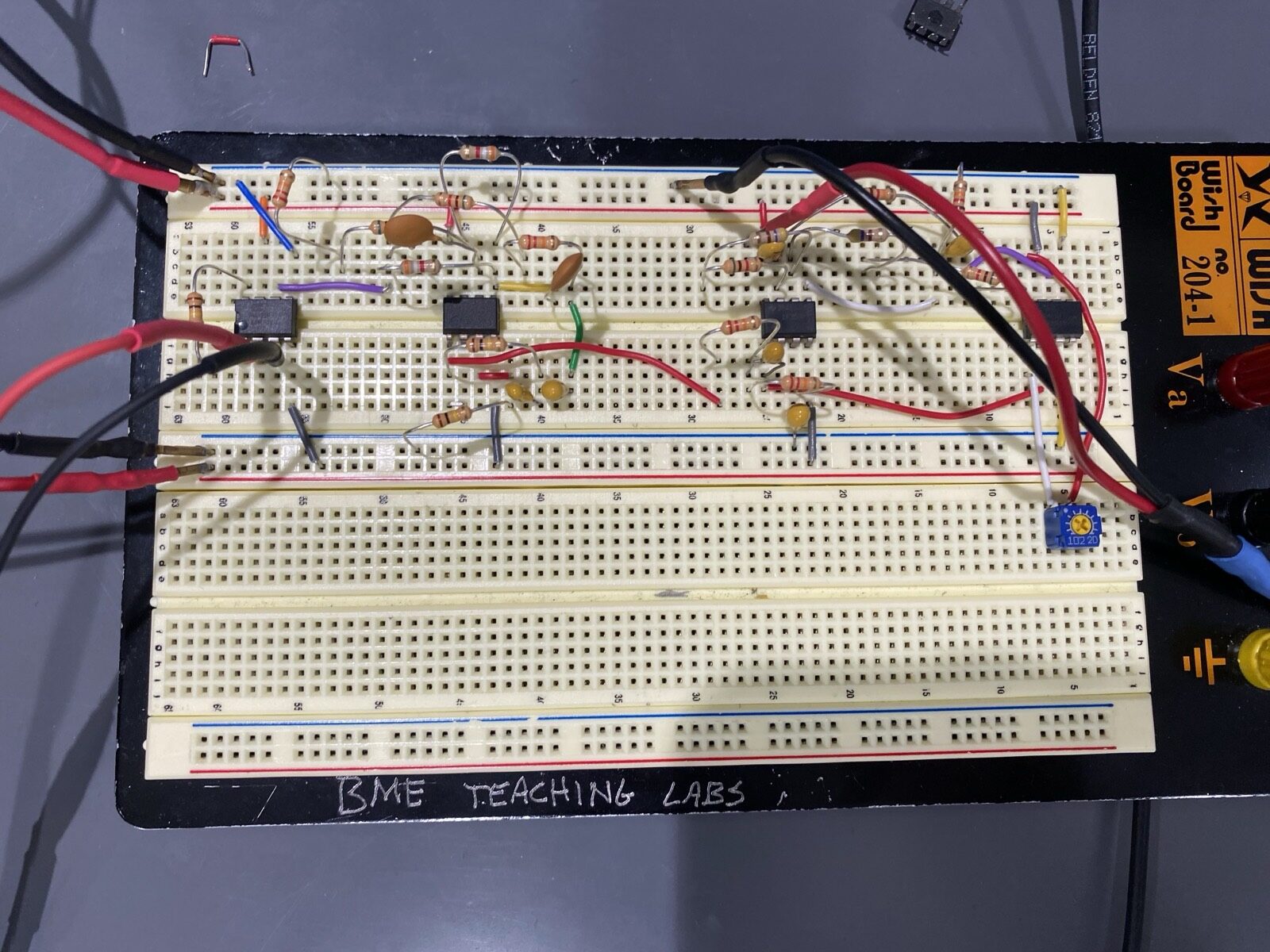
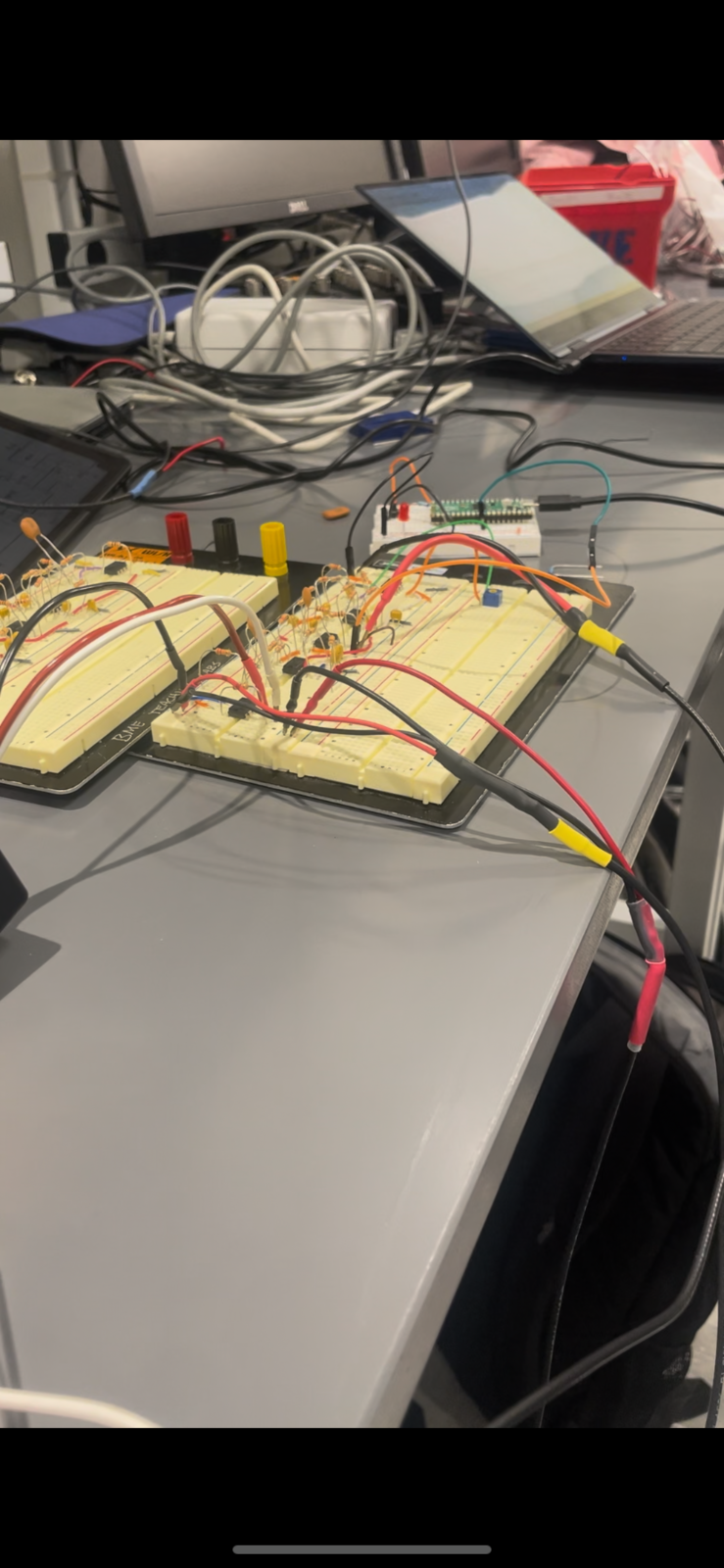
Instrumentation amplifiers to pull a differential signal off the body, a bandpass filter for the band we cared about, and notch filters to kill the noise. The Pi Pico's ADC will not accept a signal centred on zero, so a level shifter lifts it into range. Then peak detection in software, and an LED that lights the instant you blink.
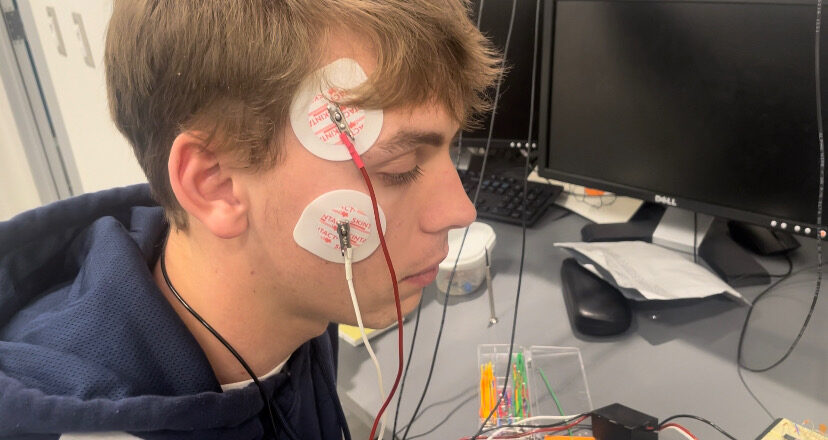
The final electrode placement was above the eyebrow, on the cheekbone, and behind the ear as a reference. We took the general wiring approach from a DIY guide, then designed our own circuit and wrote our own acquisition and analysis code.